Tuesday, 6 May 2008

The moon and mercury

Its been a while since I took any photos of the night sky. What with some foul weather, and a dose of flu that had me confined to bed for a week, the opportunities have been thin on the ground. However tonight it was clearish, although some hazy cloud around, and I wondered about looking for some M object or other to try and photograph. However checking with a few star charts, and with stellarium, it seems Mercury might be visible soon after sunset.
Its in the west obviously, which is not a good view from our garden. A whacking big house being in the way for one! However we have a balcony on the front of the house that we never use, which I thought might be useful. It turns out to be an excellent platform for this. Being on the first floor, its not too far being at roof top level, or at least looking over the houses across the street is only 1 or 2 degrees from horizontal.

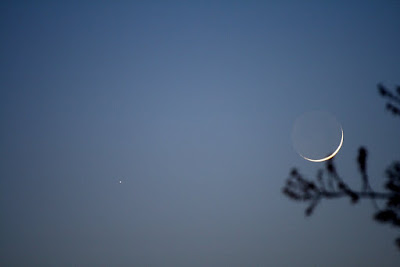
Anyway, I scanned the sky anxiously as the Sun set. Stellarium showed the moon would be lined up with Mercury, but such a thin wedge that it might not be visible. Eventually after much scanning, and not a little ridicule from the neighbours, I spotted a thin rim of the moon.
About 30 minutes later, as it got darker, there was Mercury - right where it should be!

Thursday, 10 April 2008

Saturn again

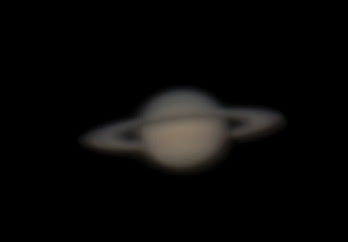
Last night, I spent a long time trying images of Saturn. I've got a new motorised focuser, which finally means I can focus in an out with out any perceptible shake of the image. This makes it a little easier getting an image into focuser, although its still a lot of trial and error.

This is the best of the pictures from last night.

Tuesday, 8 April 2008

An iridium flare

Last night was a great night for observing orbital things, in theory. The space shuttle, a number of rocket bits and pieces and various other satellites were all scheduled to pass overhead.
However, that was the theory. In practice there was an awful lot of cloud about. None of that wispy mostly transparent stuff. No, this was thick piled up stuff as dense as you like. But - it wasn't wall to wall, at least not all the time.
Anyway - I went out to try and spot the ISS - although it was a bright pass, the time was not good, as the sky was still a faint bluey colour, the sun not having set very long ago. I could see a couple of the brighter stars after a while and the ISS should be magnitude -1.8 which is brighter than pretty much anything else in the sky other than the moon, but it wasn't looking good for the 3rd magnitude rocket bit that was coming over at the same time. I managed to spot the ISS eventually, but it wasn't the bright object it normally was.

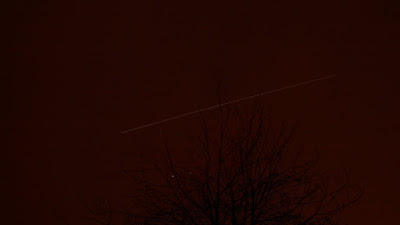
I skipped most of the other passes as they were not very bright and with the large covering of cloud, would be difficult to spot. However there was an iridium flare scheduled for about 5 minutes to 10. The iridium satellites are a whole group of orbiting communication satellites, that have a highly polished panel attached, that if it happens to be in just the right orientation reflects the sun very brightly. There are programs to predict these events, I used the heavens above site.
I set up my point-and-shoot digital camera on video mode on a tripod pointing roughly in the right direction to try and spot it. I waited until about the right time, and then pressed the button and hoped that it was pointing about right, and that nasty bank of cloud would not obscure it.

What do you know, I saw it and caught it too!


It looks better at the original resolution, but you can see a bright dot at least. It is magnitude -7 or so, which is very bright indeed.
Tuesday, 1 April 2008

ISS and ATV

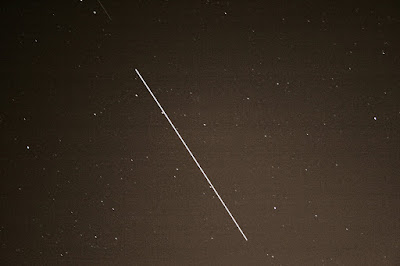
The ISS is being serviced by the ATV at the moment. They are in about the same orbit, but the ATV is just a little ahead of the ISS. The ISS is very visible at magnitude -2 or better, and the ATV is noticeable as it is leading the ISS. This particular ATV is the Jules Verne and is testing out various things.

Anyway, it was clear last night, but there was high level cloud which made everything a bit fuzzy, and the photos didn't show very much.

Tonight it was a much crisper night, and I tried taking the camera off manual and letting it take different length exposures based on the available light. They varied from about 5 seconds to 10 or 12. One of them actually caught both vehicles and showed them up quite nicely after a bit of rebalancing of levels. You can see the ISS as the main streak, and just to the top of the frame there is a thin streak from the ATV.

Also evident was about 3/4 of the way across the sky it went into shadow and started to fade, which is caught in the last one.

Tuesday, 25 March 2008

Another go at Saturn

I thought it was time to switch back from the DSLR to the LPI CCD camera and have another go at planetary imaging. After tea I had a look outside, and had noted the relatively clear skies throughout the day so thought it worth a go.

Having got the equipment outside, and selected polar alignment, I watched as polaris, and actually nearly the whole sky began to cloud over. By the time I was ready to try aligning there were no stars left to align on! So I went in and watched some TV and had a cup of coffee. An episode of Torchwood later, and the sky had cleared nicely.

I hooked up the LPI and the laptop, and tried Mars to begin with. A couple of attempts but it wasn't really showing up as more than a slightly orange blob.

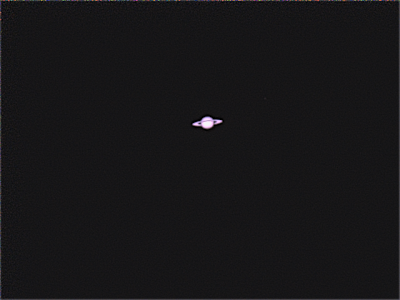
So I switched to Saturn, which is now much higher in the sky. After a bit of fiddling around, and attempting to use the LPI to both image and guide, and a couple of software lockups, I succeeded in getting something.


Not too bad, in fact it was looking good enough that I thought it would withstand a bit more magnification. So I went inside and got a 2x barlow lens and slotted it in.
It was definitely larger, but focusing was really difficult.

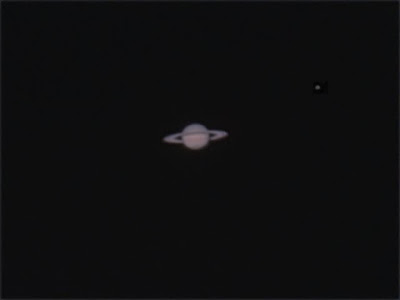
After a bit more fiddling around, and using registax on the results and a bit of tweaking this is sort of the final version, even showing a moon.


This has to be the best Saturn image I have to date, which is nice!

Thursday, 13 March 2008

Constellations

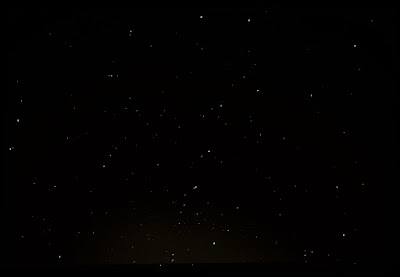
It was very windy last night, so I didn't try any telescope shots. There was a lot of broken cloud about and it kept obscuring different parts of the sky. However with the camera on a tripod hooked up to the laptop I thought it worth a few shots. With it fully wired up, once you are focused and aligned you can just leave it to get on with 25 shots of 25 seconds and go into the warm.

I started with the plough, as it is nicely aligned and easy to see. Had a go at Saturn in Leo, but clouds and aircraft conspired to wreck that.

Cassiopeia looked reasonable so I took quite a few of that and stacked them. I need to get better at post processing though.

Wednesday, 5 March 2008

Another go at the orion nebula

I tried some rather short exposure settings on M42, but decided this time to try some 25s exposures with the DSLR mounted at prime focus on the telescope. I wasn't sure that the telescope would track well enough. Also Orion is just above the house and descends below it through the night, so not an ideal location either. Anyway - worth a try.

It turned out that many of the images had elliptical stars, or were smeared out, but there were a number within the 25 taken that looked ok.

I used DSLRshutter program to take them which worked pretty well. I also experimented with nebulosity for focussing without much success.

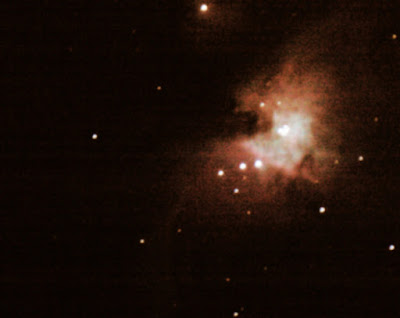
Anyway - after throwing lights, flats, darks and biases at deep sky stacker, it pronounced that only one of the images was worth stacking... its probably right but it could have broken the news gently!

Anyway, its probably my best shot of M42 to date, but still not much compared with anyone who's any good!


Step by step, its getting a bit better.